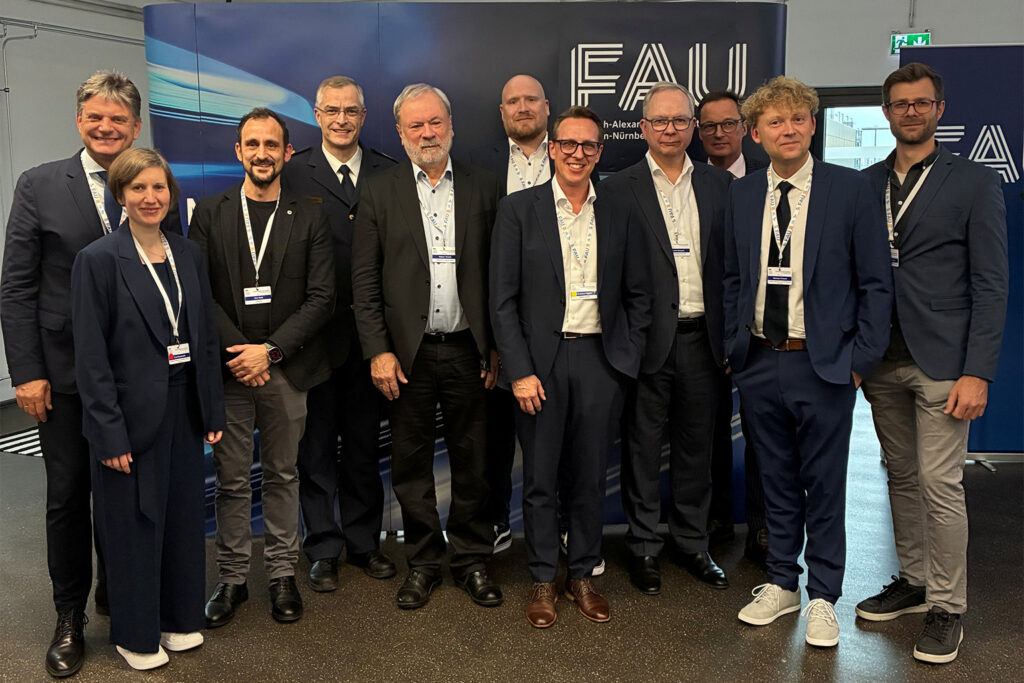

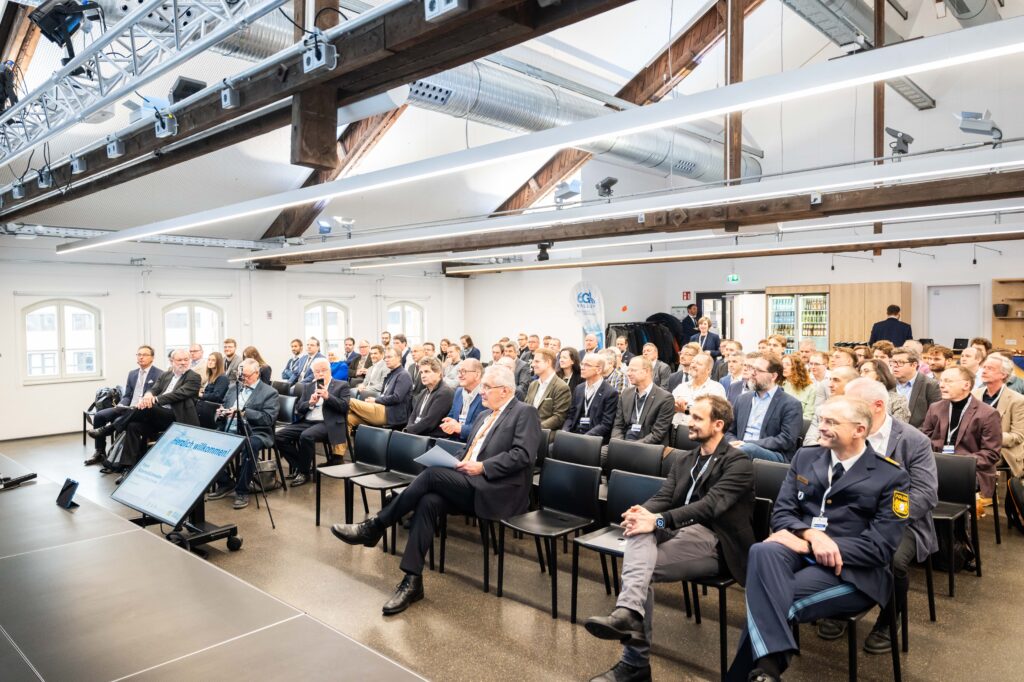
With their event focusing on Domestic and Civil Security, the Friedrich-Alexander-Universität Erlangen-Nürnberg (FAU), DITS.center e. V., AACII and forum organizer Prof. Norman Franchi, Chair of Smart Electronics and Systems (LITES), sent a strong message about the critical importance of interdisciplinary research in an increasingly complex security environment.
From the outset, it was clear how crucial the close collaboration between research, stakeholders, innovation drivers—such as startups and small-to-medium enterprises (SMEs)—industry, and government is. In their opening remarks, FAU President Prof. Joachim Hornegger and Prof. Norman Franchi, who is also Chair of DITS.center e.V. and Coordinator of 6G-Valley, emphasized not only the scientific potential but also the societal responsibility to actively shape security research.
The participation and keynote address by Bavaria’s Minister of the Interior, Joachim Herrmann, further underscored the political relevance of the topic. His perspective on current domestic security challenges laid the foundation for subsequent technological insights. Contributions from research and industry—including real-time intelligence approaches by Traversals Analytics and Intelligence GmbH, new drone reconnaissance possibilities using mobile technology (TU Ilmenau), as well as developments in cryptography and cybersecurity at FAU—impressively demonstrated the diverse and dynamic nature of today’s security research field.
A particular highlight of the event was the “Innovate and Connect” exhibition, where startups, research groups, and corporate partners showcased their ideas and prototypes. The guided tour offered participants not only a view of current projects but also the opportunity for direct exchange. This fusion of scientific excellence, entrepreneurial ambition, and technological creativity was palpable and widely acknowledged as enriching.
With input from federal authorities, such as Claudia Plattner, President of the Federal Office for Information Security, and insights into high-tech industry developments like airport security technologies from Rohde & Schwarz, the broad spectrum of security-relevant innovations became evident. The program was complemented by contributions from FAU research, particularly in real-world cryptography, illuminating cybersecurity challenges from a scientific perspective.
Overall, the event, which was the kickoff for a series of future installments, demonstrated that 21st-century security can only be ensured through networking, technological expertise, and interdisciplinary collaboration. FAU has once again positioned itself together with its partner DITS.center e. V. as a central hub where research, industry, and politics come together to develop solutions for the security issues of tomorrow. The next event in the series, focusing on national security, is scheduled for 2026.
 1/6
1/6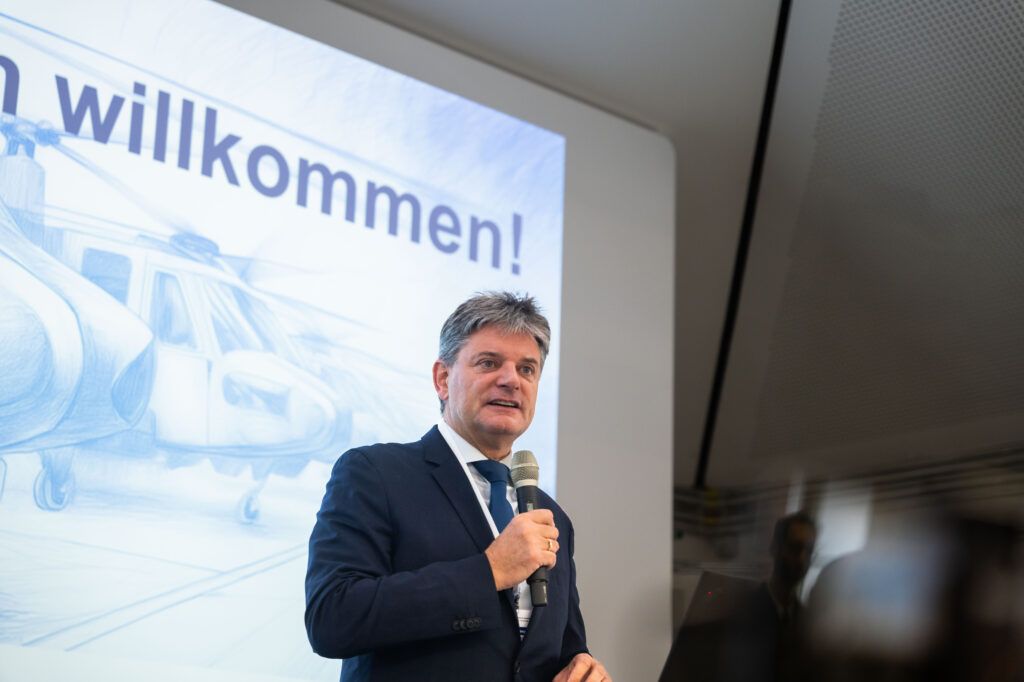 2/6
2/6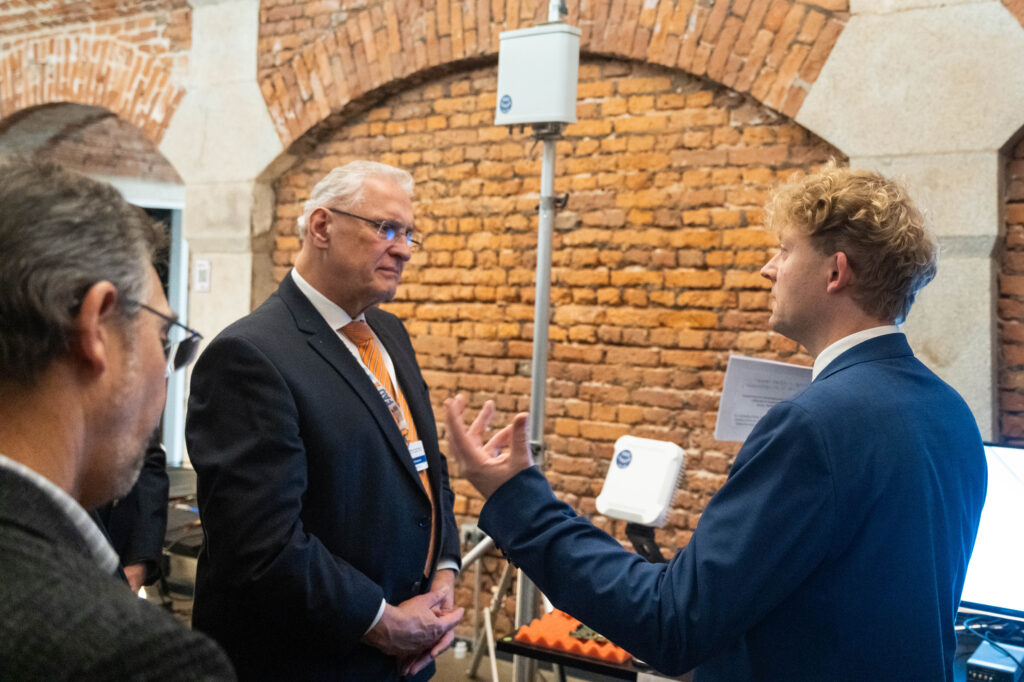 3/6
3/6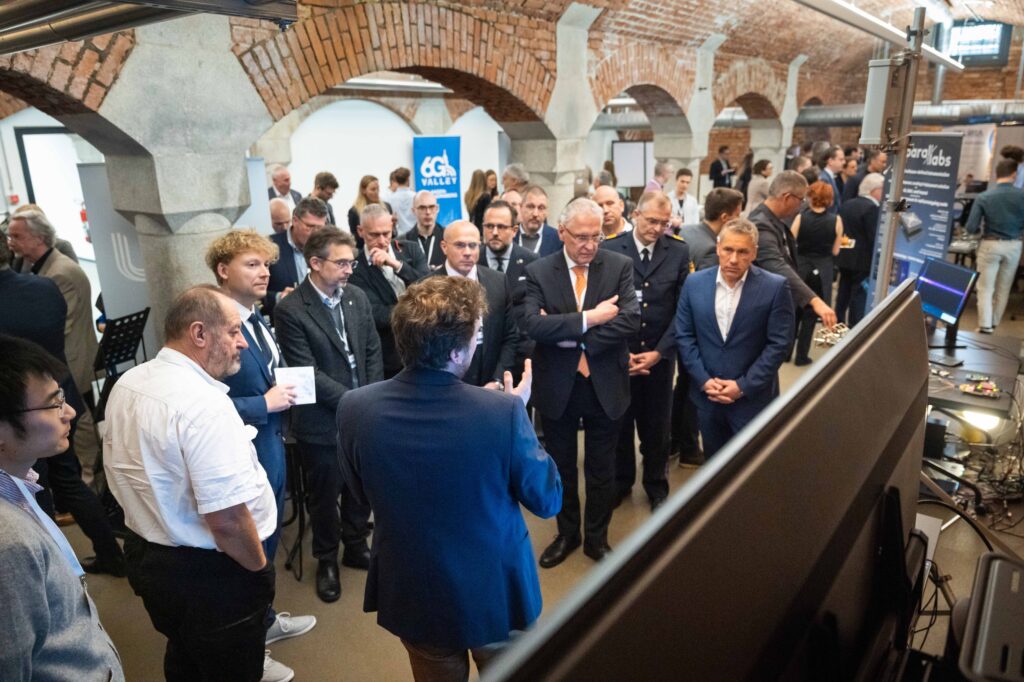 4/6
4/6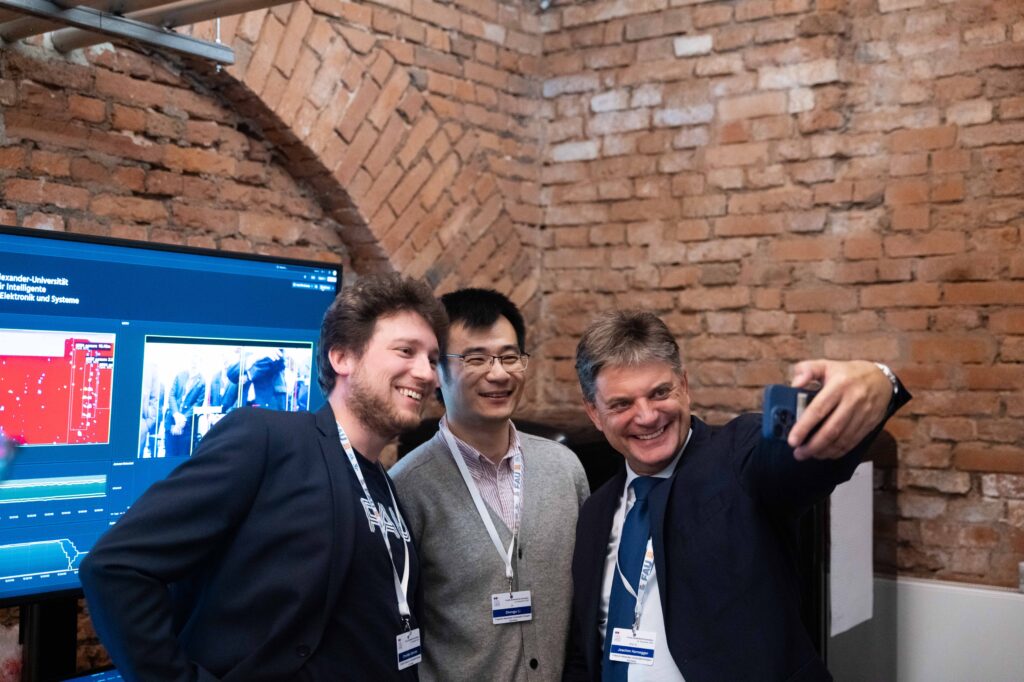 5/6
5/6